How Much Should My Puppy Eat
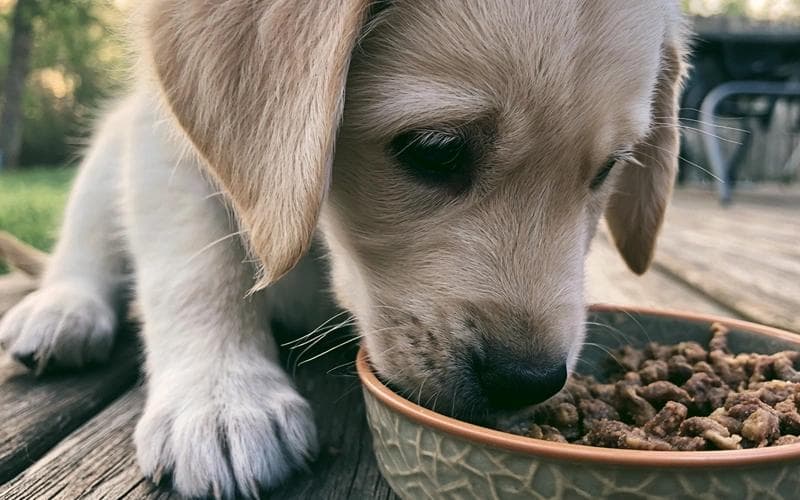
Wondering how much your puppy should eat? Learn feeding guidelines, growth factors, and how nutrition supports healthy puppy development.
How Much Should My Puppy Eat?
One of the most common questions new pet parents ask is, "How much should my puppy eat?" Feeding the right amount is important because nutrition helps support healthy growth and development throughout puppyhood.
However, there is no single answer that applies to every puppy. Age, breed size, activity level, growth rate, and body condition can all influence how much food a puppy may need.
Understanding these factors can help pet parents make more informed decisions as their puppy grows.
General Puppy Feeding Guidelines
Most veterinary nutrition experts recommend using the feeding guide on the puppy food package as a starting point and then adjusting based on growth and body condition.
A common feeding schedule is:
8–12 weeks - 4 meals per day
3–6 months - 3 meals per day
6–12 months - 2 meals per day
Large and giant breed puppies may continue growing for much longer than smaller breeds and often require closer monitoring throughout development.
The exact amount of food depends on the specific product being fed because calorie content varies significantly between brands and formulas.
How Do You Know If Your Puppy Is Eating Enough?
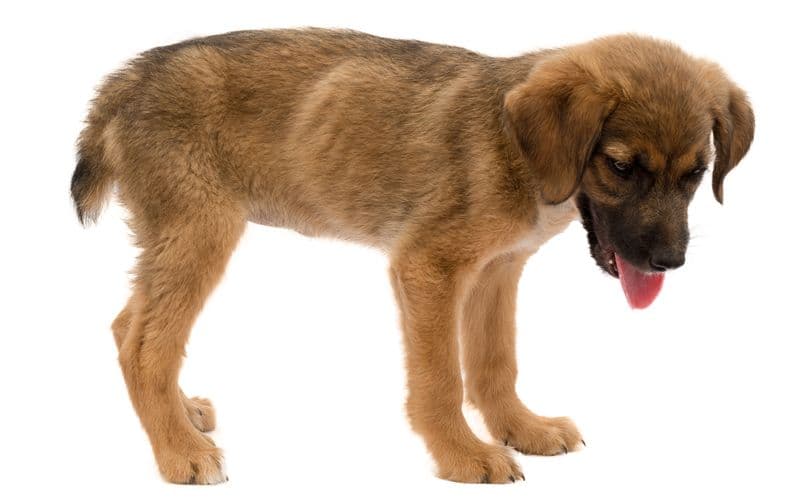
One of the most useful tools is body condition rather than focusing solely on weight or food quantity.
A puppy that is being appropriately fed will generally:
- Have ribs that can be felt with light pressure
- Have a visible waist when viewed from above
- Show a slight abdominal tuck when viewed from the side
- Gain weight steadily as growth progresses
Healthy growth is not necessarily the fastest possible growth. In fact, excessive weight gain during development may place additional stress on growing joints and other developing structures.
Find more information in the article Protecting Your Puppy’s Growth Plates.
Most veterinary nutrition experts recommend using the feeding guide on the puppy food package as a starting point. However, feeding recommendations on food bags are estimates rather than exact prescriptions. They cannot account for every puppy's metabolism, activity level, growth rate, body condition, or developmental stage.
As a result, some puppies may need slightly more food and others may need slightly less than the amount listed on the package. Monitoring growth, body condition, and overall development often provides a more accurate picture than relying solely on the feeding chart.
Signs Your Puppy May Need a Feeding Adjustment
Because growth is dynamic, feeding needs may change over time. Pet parents may want to pay attention if a puppy:
- Appears consistently hungry despite appropriate feeding
- Is gaining weight too rapidly
- Is becoming noticeably overweight
- Is losing weight
- Appears unusually thin
- Experiences major changes in activity level
These observations do not automatically mean something is wrong, but they may indicate that nutritional needs should be reassessed.
Adjusting Food Intake for a Growing Puppy
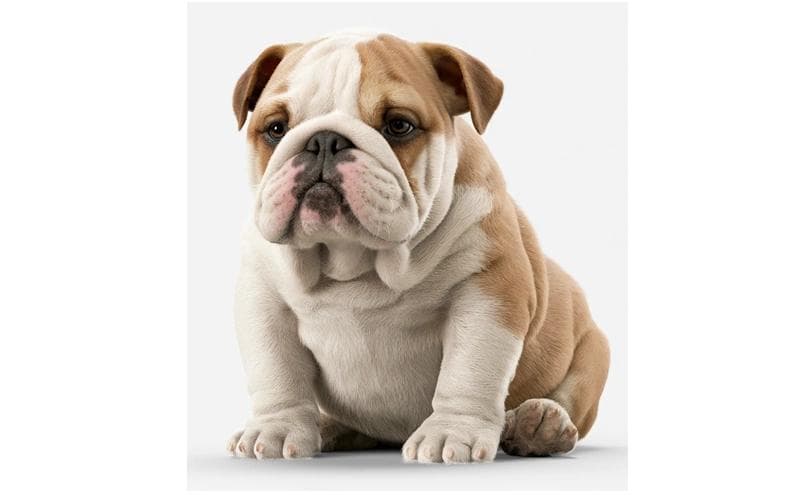
If your puppy appears slightly overweight, consider reducing the total daily food by about 5–10%.
If your puppy appears slightly underweight, consider increasing the daily food by about 5–10%.
After making any adjustment, monitor body condition and growth over the next 1–2 weeks before deciding whether another change is needed. Small, gradual adjustments are generally preferable to large changes while a puppy is still growing.
Why Comparing Puppies Can Be Misleading
Many pet parents compare their puppy's food intake to another puppy. Unfortunately, this often creates confusion.
One puppy may eat significantly more food simply because the food contains fewer calories per cup. Another puppy may be more active, larger, or experiencing a different stage of growth.
The number of cups consumed each day does not always provide meaningful information unless the specific food, calorie content, age, and developmental stage are also considered.
Understanding Puppy Development
Growth and development are often discussed as though they mean the same thing, but they are not identical.
Growth refers to physical changes such as increased size and weight. Development includes changes in movement, coordination, learning, confidence, body awareness, and how puppies interact with the world around them.
A puppy's nutritional needs are closely connected to these developmental processes.
To learn more about how puppies develop physically and mentally throughout the first stages of life, read our Puppy Development (Body + Mind + Growth) guide.
Looking Beyond the Food Bowl
The question "How much should my puppy eat?" is really a question about supporting healthy development.
Rather than focusing only on a specific number of cups per day, it can be helpful to view nutrition as one part of the larger developmental picture. When nutrition, growth, learning, movement, and environment work together, puppies are better positioned to develop into healthy adult dogs.
References
- 📚 [1]Hand MS, Thatcher CD, Remillard RL, Roudebush P, & Novotny BJ (2010). Small Animal Clinical Nutrition. 5th ed.. Topeka, KS: Mark Morris Institute.
- 📚 [2]Case LP, Daristotle L, Hayek MG, & Raasch MF (2011). Canine and Feline Nutrition. 3rd ed.. St. Louis, MO: Mosby Elsevier.
- 🌐 [3]National Research Council (2006). Nutrient Requirements of Dogs and Cats. Washington, DC: National Academies Press.
- 📄 [4]World Small Animal Veterinary Association Global Nutrition Committee (2011). Nutritional Assessment Guidelines. J Small Anim Pract, 52(7).