Why Muscle Strength Is About More Than Power
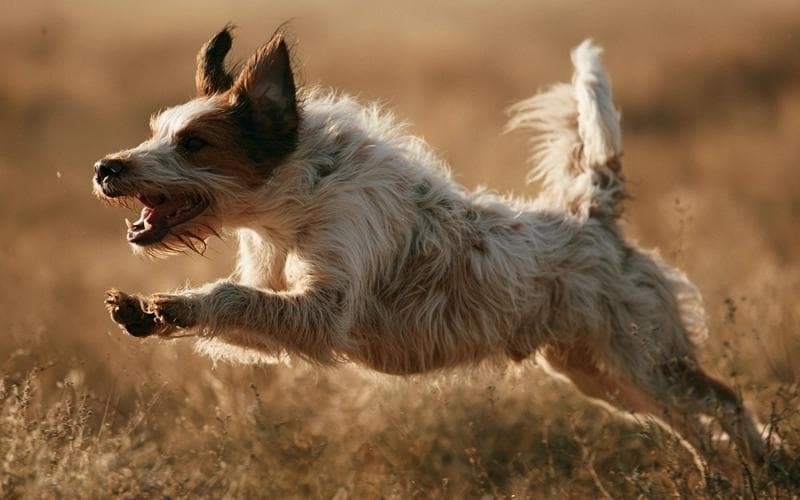
Muscle strength helps dogs do far more than produce power. Learn how muscles support posture, joint stability, balance, braking, and everyday movement.
When we picture a strong dog, we may imagine a powerful athlete sprinting, jumping, pulling, or launching over an obstacle.
But most dogs use muscular strength in much quieter ways.
Strength helps a dog rise from the floor, remain steady while standing, walk down a hill, slow the body before a turn, climb into a car, and adjust when the ground shifts beneath the paws. Muscles do not simply create movement. They also control movement, support posture, stabilize joints, and help the different parts of the body work together.
For our dogs, strength is not only about producing more power. It is about moving with control.
Strength, Power, and Endurance Are Not the Same
These terms are often used interchangeably, but they describe different physical abilities.
Muscular strength is the ability of a muscle or group of muscles to produce force.
Power is the ability to produce that force quickly. A dog accelerating from a standstill, jumping onto a platform, or making an explosive turn is using power.
Muscular endurance is the ability to maintain or repeat an activity without losing movement quality too quickly.
A dog may have enough power to jump onto the couch but lack the controlled strength needed to walk steadily down a staircase. Another dog may be able to walk for a long time but struggle to rise smoothly from the floor.
Each ability matters, but they are not interchangeable.
Muscles Move the Body—and Help Hold It Together
Bones and joints provide the body’s framework, but they cannot create or control movement by themselves. Muscles generate force by pulling on bones through tendons.
Some muscles create visible movement. Others make smaller adjustments that help keep a joint or body region steady while movement occurs elsewhere.
Research using canine musculoskeletal models shows that muscles may perform different jobs during different parts of a single stride. Some muscles move a joint, while others help stabilize the hip, stifle, or hock as the paw accepts weight.
This means that a muscle does not need to create a large or dramatic motion to have an important job.
During an ordinary walk, muscles are constantly coordinating when to activate, how much force to produce, and when to relax. Strength allows those muscles to manage the forces created as the paws meet the ground and the body travels forward.
Strength Helps Stabilize the Joints
A joint must be mobile enough to allow movement, but stable enough to keep the connected bones appropriately aligned while forces pass through it.
Ligaments, tendons, the shape of the joint, and other tissues contribute to stability. Muscles add another layer of active support.
As a dog places weight on a limb, muscles around the joint respond to the forces acting on it. They help control how quickly the joint bends, extends, or shifts. This active muscular support is sometimes described as dynamic stability because it changes continuously as the dog moves.
Strong muscles do not make a dog immune to injury, and they cannot correct an unstable or painful joint on their own. However, adequate muscular strength can help a healthy dog control the joints more effectively during ordinary activity.
This is one reason canine fitness should not focus only on the largest or most visible muscles. Smaller stabilizing muscles may produce less obvious movement while still contributing to joint control.
Strength Supports Posture
Posture is not simply the position in which a dog happens to stand. Maintaining posture is an active process.
Even while appearing still, a dog’s body makes small adjustments to keep its center of mass within its base of support. Information from the visual, vestibular, and somatosensory systems helps the nervous system detect the body’s position. Muscles then respond to maintain or restore stability.
These adjustments may become more noticeable when a dog:
- Stands on an unfamiliar surface
- Turns the head or reaches for a treat
- Lifts one paw
- Changes direction
- Moves across uneven ground
- Is gently bumped or loses balance
The dog must produce enough muscular force, at the correct time, to keep the body organized.
Postural strength is therefore not necessarily visible as dramatic muscle development. It often appears as steadiness, alignment, and the ability to make small corrections without unnecessary movement.
Strength Helps Control Speed
Muscles do not only move the body forward. They also help slow it down.
Consider a dog walking down a hill. Gravity is already pulling the body forward and downward. The dog’s muscles must control that motion so the body does not simply fall toward the bottom.
A similar type of control occurs when a dog lands, stops, lowers into a down position, or decelerates before changing direction. The muscles may produce force while lengthening, helping manage the rate and range of movement.
This controlled braking function is important during daily activities as well as sports. Accelerating may look more athletic, but the ability to slow down smoothly can be just as demanding.
A dog that can generate speed but cannot control that speed may move with greater impact, wider turns, hurried foot placement, or abrupt stops.
Strength Contributes to Balance
Balance is sometimes treated as a separate fitness category, but balance and strength are closely connected.
The nervous system must first recognize that the body is becoming unstable. The muscles must then respond quickly enough—and strongly enough—to make the correction.
In a study of healthy dogs standing on a moving platform, greater platform movement produced greater changes in center-of-pressure measurements, indicating that the dogs had to work harder to maintain postural stability.
Balance therefore involves more than knowing where the paws are. The dog also needs the muscular capacity to act on that information.
This does not mean every dog should train on highly unstable equipment. A surface that moves too much can exceed a dog’s current ability and may encourage bracing, wide foot placement, or attempts to escape the equipment rather than thoughtful muscular control.
Challenge should match the dog.
Strength Can Make Everyday Movement More Efficient
When a task requires nearly all of a dog’s available strength, it becomes difficult to perform that task smoothly or repeatedly.
Imagine that rising from the floor requires most of the force a dog can produce through the rear limbs. The dog may still be capable of standing, but the movement may look slow, effortful, or inconsistent.
If the dog has greater strength available than the task requires, there is more physical reserve. The same movement may require a smaller percentage of the dog’s total capacity.
That reserve can support:
- Smoother position changes
- Better control during turns
- More consistent posture
- Greater confidence on stairs or uneven surfaces
- Less rapid fatigue during ordinary activities
This does not mean that every movement problem is caused by weakness. Pain, orthopedic disease, neurological conditions, excess body weight, restricted joint motion, poor coordination, fear, and environmental factors can all affect the way a dog moves.
Strength is one part of a larger movement system.
Strength Is a Whole-Body Skill
It is easy to divide the dog into separate regions: front legs, rear legs, core, back, or shoulders. In movement, however, these regions must cooperate.
The rear limbs often contribute to propulsion and position changes. The front limbs support a greater portion of the dog’s standing body weight and help manage braking forces. The trunk transfers and controls forces between the front and rear of the body.
Back and trunk muscles also contribute to stabilizing the body axis during locomotion. Changes in limb use can alter muscle recruitment in other limbs and along the back, demonstrating how one region may compensate when another cannot perform its normal role.
This is why developing one impressive-looking muscle group does not necessarily create balanced movement.
Functional strength depends on coordination across the entire body.
Large Muscles Do Not Always Mean Functional Strength
Muscle size can provide useful information, particularly when comparing changes over time. However, appearance alone does not tell us how effectively a dog uses that muscle.
Functional strength also depends on:
- Nervous-system control
- Coordination between muscle groups
- Joint position
- Available range of motion
- Timing of muscle activation
- The dog’s confidence and understanding of the task
A dog may look muscular but rely on momentum, speed, or a familiar compensation pattern. Another dog may have less visible muscle definition but demonstrate excellent control during slow, precise movements.
Strength should therefore be considered through function, not appearance alone.
Can the dog control the body? Can the dog maintain alignment? Can the dog move smoothly in both directions? Can the dog perform a task without rushing or shifting excessive work to another body region?
These questions often tell us more than muscle size by itself.
Strength Needs Change Throughout Life
A puppy, adult dog, canine athlete, and senior dog do not need identical physical challenges.
Puppies are still developing coordination, body awareness, and the ability to manage their changing proportions. Adult dogs need enough strength for their everyday lifestyle, whether that involves neighborhood walks, hiking, play, work, or sport. Athletic dogs may need more specialized strength to manage the forces and movement patterns of their activities.
Senior dogs may face gradual changes in muscle mass and postural control. Studies have documented reduced muscle area in older dogs, while newer body-composition research has found that canine lean mass tends to decline after reaching its adult peak.
Research has also found age-related changes in postural steadiness in companion dogs.
These changes are not a reason to stop appropriate activity. They are a reason to pay closer attention to movement quality, comfort, environment, and the dog’s changing abilities.
What Might Reduced Strength Look Like?
A dog cannot tell us directly that a task requires more muscular effort than it once did. Pet parents may instead notice changes such as:
- Taking longer to rise
- Using the front legs heavily when standing
- Hesitating before stairs or jumping into the car
- Shifting weight away from one limb
- Standing with the feet unusually wide
- Losing posture during a position change
- Becoming less controlled as an activity continues
- Avoiding slippery or uneven surfaces
- Shortening walks or slowing unexpectedly
These observations do not prove that a dog is weak. They may also indicate pain, joint disease, neurological changes, vision problems, fear, fatigue, or another medical concern.
A new, persistent, or one-sided change in movement should not simply be treated as a fitness problem. It deserves veterinary evaluation.
Building Strength Is Not About Making Exercise Harder
Effective strength development does not require exhausting a dog or immediately adding unstable equipment, high jumps, heavy resistance, or long sessions.
For healthy dogs, strength can be supported through thoughtfully selected activities involving controlled weight shifts, position changes, steady walking on appropriate inclines, careful foot placement, and slow, deliberate movement.
The exact activity should reflect the dog’s:
- Age and stage of development
- Current fitness
- Body structure
- Movement quality
- Health history
- Daily activities
- Sport or working demands
The goal is not simply to make the dog work harder. The goal is to create an appropriate challenge while the dog remains comfortable, confident, and able to maintain good movement.
When control disappears, difficulty may have exceeded the dog’s current ability.
Strength Creates Options
A strong dog is not merely a dog that can run faster, pull harder, or jump higher.
Strength gives the body options.
It helps the dog move forward and slow down. It supports the joints while allowing them to move. It helps maintain posture, recover balance, and manage everyday tasks with less effort.
Most importantly, useful strength is not measured by one dramatic performance. It is reflected in the quality and control of the dog’s movement over time.
When we look beyond power, we begin to understand muscle strength for what it truly is: part of the foundation that supports confident, efficient movement throughout a dog’s life.
References
- 📄 [1]Brown NP, Bertocci GE, States GJR, Levine GM, Levine JM, Howland DR. (2020). Development of a canine rigid body musculoskeletal computer model to evaluate gait.. Frontiers in Bioengineering and Biotechnology., 8(150).
- 📄 [2]Hutchinson D, Sutherland-Smith J, Watson AL, Freeman LM. (2012). Assessment of methods of evaluating sarcopenia in old dogs.. American Journal of Veterinary Research, 73(11).
- 📄 [3]Lutonsky C, Peham C, Mucha M, et al. & (2023). External mechanical perturbations challenge postural stability in dogs. Frontiers in Veterinary Science.
- 📄 [4]Mondino A, Wagner G, Russell K, et al. & (2022). Static posturography as a novel measure of the effects of aging on postural control in dogs. PLoS ONE, 17(7).