How Can I Safely Strengthen My Dog?
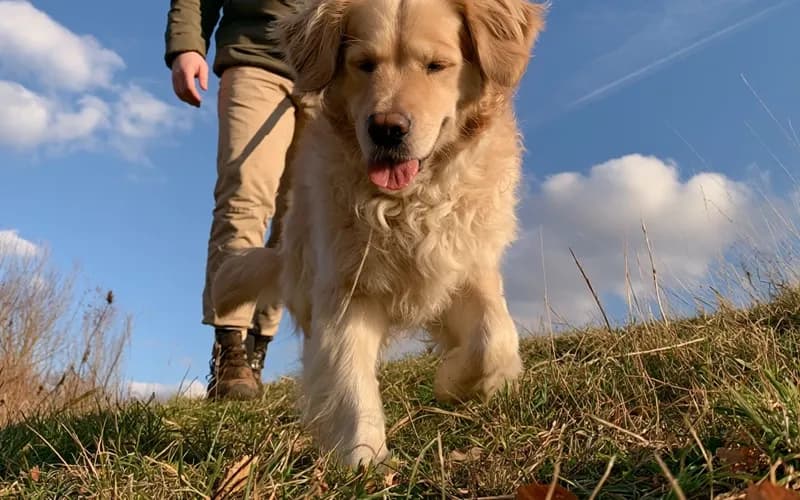
Build your dog’s strength safely with controlled walks, simple exercises, and gradual progress for better movement and balance.
How Can I Safely Strengthen My Dog?
If you are wondering how to safely strengthen your dog, start with controlled walks, simple exercises, secure footing, and gradual progress. Keep each session short and choose activities that match your dog’s age, health, and current fitness level.
Strong muscles support the joints, improve balance, and make everyday movement easier. Safe dog strengthening should focus on slow, controlled movements—not speed or exhaustion.
Start With Controlled Walks
Regular leash walks are one of the safest ways to strengthen your dog while also building endurance. Measure walks by time rather than distance because dogs walk at different speeds.
There is no single walking plan that is right for every dog. For an inactive adult dog, use this cautious plan:
- Begin with a five-minute walk once or twice a day.
- Walk on flat ground at a comfortable pace.
- Follow the same schedule for one week.
- If your dog remains comfortable, add one or two minutes to each walk the following week.
- Continue increasing the walking time once a week.
Keep the pace and terrain the same when increasing time. Do not add longer walks, faster speeds, and hills during the same week.
Pause the increase if your dog starts lagging, limping, sitting down, or panting more heavily than expected. Stiffness or unusual tiredness later that day or the following morning may also mean the walk was too difficult. Return to the last comfortable walking time.
Dogs that already walk regularly can use their normal comfortable walking time as the starting point.
Add Gentle Hills
Once your dog can handle regular walks comfortably, you can introduce a gentle hill. Walking uphill increases the workload on the rear-leg muscles, while slow downhill walking shifts more load toward the front legs and requires controlled braking.
Keep the first hill sessions short. Walk slowly and avoid steep, slippery, or uneven ground.
Try Sit-to-Stand Exercises
A sit-to-stand is similar to a controlled squat. It can strengthen your dog’s rear legs.
Ask your dog to sit with both back legs beneath the body. Then ask your dog to stand while keeping the front feet in place and moving the rear legs backward. Begin with three to five slow repetitions on a nonslip surface.
Stop if your dog sits to one side, struggles to rise, or avoids placing weight on one leg. Never push your dog’s hips into position.
Practice Slow Backward Steps
Walking backward encourages balance, coordination, and rear-leg awareness.
Begin with five to eight slow steps. Practice on carpet, grass, or another surface with good traction.
Practice Stand–Down–Stand Exercises
Ask your dog to stand squarely on a non-slip surface. Cue your dog to lie down and then return to standing.
The front and rear feet should remain in place throughout the exercise. Both shoulders and hips should lower at the same time and rise together. Begin with three slow repetitions.
Walk in Wide Figure Eights
Place two objects several feet apart and walk your dog around them in a wide figure-eight pattern. Complete the exercise in both directions.
Wide turns encourage gentle weight shifting. Tight turns are more difficult, so keep the loops large at first.
How Often Should My Dog Exercise?
A healthy beginner may benefit from three short strength sessions per week. Start every session with five to ten minutes of easy walking.
A simple session may include:
- Three sit-to-stand repetitions
- Five to eight backward steps
- Three stand–down–stand repetitions
- Two wide figure eights in each direction
- A relaxed cool-down walk
Increase only one part of the workout at a time. Add a repetition or extend the walk, but do not increase speed, time, and difficulty together.
How Do I Know if My Dog Has Done Too Much?
Stop exercising if your dog begins limping, stumbling, trembling, slowing down, or refusing an activity.
Watch your dog later that day and the following morning. Stiffness, difficulty getting up, or reluctance to walk may mean the session was too difficult.
If your goal is to safely strengthen your dog, build strength gradually, use secure surfaces, and stop before your dog becomes exhausted. A safe workout should leave your dog comfortable and willing to exercise again.
References
- 📄 [1]Farr, B. D., Ramos, M. T., & Otto, C. M. (2020). The Penn Vet Working Dog Center Fit to Work Program: A Formalized Method for Assessing and Developing Foundational Canine Physical Fitness. Frontiers in Veterinary Science, 7(470).
- 🌐 [2]Barnes, C., Weir, M., & Downing, R (n.d.). Healthy Exercise for Dogs. Retrieved September 2026, from https://vcahospitals.com