How Environment Affects Dog Behavior

Learn how environment affects dog behavior, including mental stimulation, boredom, and how surroundings shape movement, learning, and daily function.
The environment a dog lives in does more than provide space—it shapes how the dog thinks, moves, and responds to the world. From early development through adulthood, surroundings influence behavior patterns, activity levels, and even how a dog experiences boredom or engagement.
Understanding how environment affects dog behavior helps you notice patterns more clearly. It shifts focus from single actions to the bigger picture around them.
What Environment Means for Dogs
Environment includes everything a dog interacts with on a daily basis. This goes beyond physical space and includes:
- Available movement space (indoor and outdoor)
- Surfaces and terrain
- Sensory exposure (sounds, smells, visual input)
- Social interactions with people and other animals
- Predictability and routine
These elements create the conditions in which behavior develops.
A dog does not act independently of its environment—behavior is always influenced by context.
How Environment Shapes Behavior
Behavior is not fixed. It develops through repeated interaction with surroundings.
When a dog experiences consistent patterns in its environment, the body and brain adapt. Over time, these adaptations influence:
- Movement patterns and coordination
- Confidence or hesitation in new situations
- Exploration and curiosity
- Response to stimuli
For example, a dog exposed to varied surfaces and movement opportunities may develop different coordination patterns than a dog with limited environmental variation. These differences are not simply preferences—they reflect adaptation.
Environment and Learning
Dogs learn through interaction. The environment determines what opportunities exist for that learning to occur.
Learning is shaped by:
- What the dog can access
- How often certain experiences repeat
- The level of challenge or complexity present
An environment that offers variety tends to promote exploration. One that is highly predictable may reduce variability in behavior.
This does not make one environment inherently “better,” but it changes the type of behaviors that emerge over time.
The Role of Mental Stimulation
Mental stimulation is closely tied to environment. It reflects how much information the dog processes through interaction with surroundings.
Mental stimulation can come from:
- Navigating space
- Investigating new objects or scents
- Problem-solving during interaction
- Social engagement
Without sufficient environmental input, opportunities for mental engagement may decrease.
For a deeper understanding, see What Is Mental Stimulation in Dogs.

Environment and Boredom
Boredom is not simply the absence of activity. It often reflects a mismatch between the dog’s needs and the level of stimulation available in the environment.
A “bored dog” may show changes such as:
- Attention-seeking patterns
- Reduced engagement with surroundings
- Destructive or misplaced activity
- Seeking stimulation in new ways
These behaviors are not random. They can indicate that the current environment is not providing enough variation or challenge.
For related insights, see What to Do When Your Dog Is Bored.
Why Puppies Respond Differently
Puppies are especially sensitive to environmental conditions because their systems are still developing.
During early life:
- The brain is highly adaptable
- Movement patterns are still forming
- Responses to stimuli are being established
This means that environmental exposure during this stage can influence long-term behavior patterns.
Limited or repetitive environments may reduce variability in early experiences, while more varied environments can increase exposure to different stimuli.
For more detail, see Why Puppies Get Bored Easily.
Physical Space and Behavior
The amount and type of space available influences how dogs move and interact.
Different environments may affect:
- Frequency of movement
- Types of movement (straight-line vs. varied directions)
- Interaction with obstacles or elevation
- Opportunities for exploration
These factors contribute to how behavior is expressed. A dog with limited movement options may show different activity patterns compared to one with more varied space.
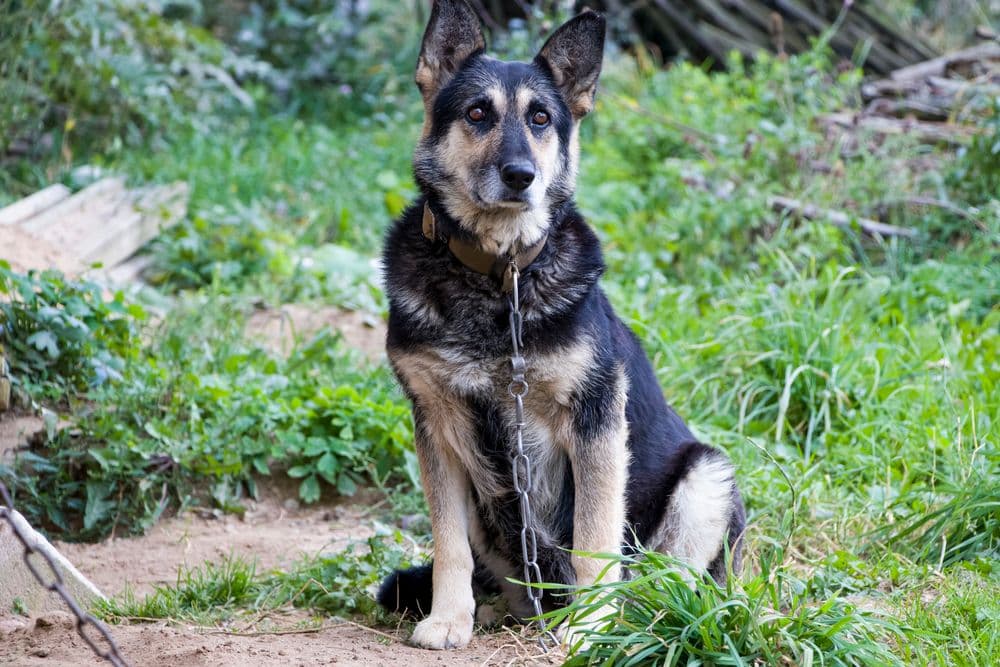
Sensory Environment
Dogs rely heavily on sensory input. The richness or limitation of sensory experiences can influence behavior.
Key sensory elements include:
- Smell (primary sense for dogs)
- Sound levels and variability
- Visual complexity
- Changes in environment over time
A highly static sensory environment may reduce engagement, while a changing environment may increase attention and interaction.
Recognizing Environmental Influence
Changes in behavior are often easier to understand when viewed through an environmental lens.
Instead of focusing only on the behavior itself, it can be helpful to consider:
- Has the environment changed recently?
- Has the level of stimulation increased or decreased?
- Are movement or interaction opportunities different?
Patterns that appear over time are often more meaningful than isolated events.
Environment Across Life Stages
The influence of environment does not remain constant throughout life.
- Puppies: high adaptability and sensitivity to exposure
- Adult dogs: more stable patterns, but still responsive to change
- Senior dogs: may respond differently due to changes in physical and sensory capacity
Environmental factors continue to shape behavior at every stage, though the type of influence may change.
Mental and Physical Connection
Environment does not affect behavior in isolation. It also interacts with physical function. Movement, coordination, and mental engagement are connected.
Changes in environment may influence:
- Willingness to move
- Exploration patterns
- Interaction with surroundings
This connection reinforces the idea that behavior reflects the whole dog, not just isolated traits.
Conclusion
Environment plays a central role in shaping dog behavior. It influences how dogs learn, move, and interact with the world around them.
Mental stimulation and boredom are not separate from environment—they are direct reflections of it. By understanding how surroundings affect behavior, patterns become easier to recognize and interpret.